Packaging for the Porch: A 2026 Specification Guide for Direct-to-Consumer CBD Parcels
The parcel is part of the product experience
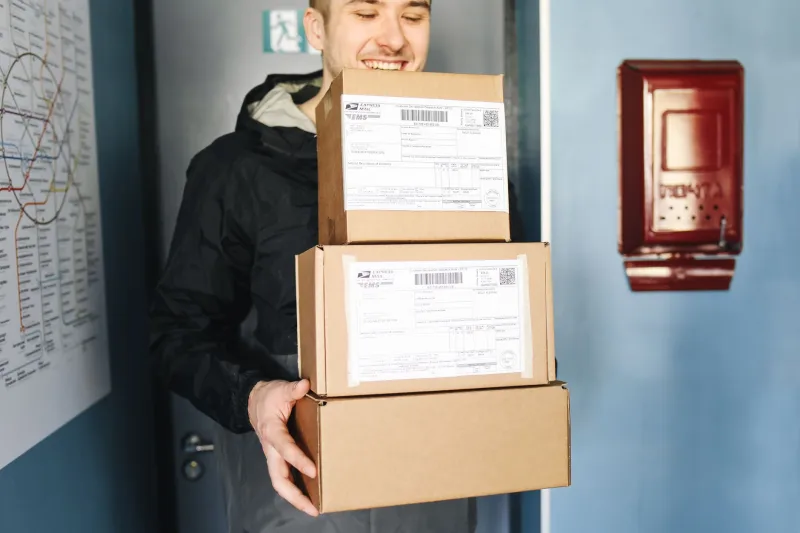
For UK CBD brands selling direct to consumers, the outer packaging has to do several jobs at once. It must survive the carrier network, protect oils and other formats from crush and leakage, avoid drawing unnecessary attention on the doorstep, and still give the customer a reason to remember the brand. In 2026, with parcel volumes high and carrier surcharges sensitive to size and weight, a thoughtful specification is both a branding decision and an operational one.
The starting point is not a box catalogue. It is the journey the parcel will take: collection from a fulfilment centre, sorting hub, delivery depot, van, doorstep, and possibly a returns route. A specification that ignores that journey will either overpack and inflate costs or underpack and generate replacements.
Start with carrier limits and the real order profile
Royal Mail and the major couriers publish size and weight thresholds that should inform the outer pack. Royal Mail small parcel limits, for example, are commonly expressed as 45 x 35 x 16 cm with a 2 kg weight limit, while medium parcels allow larger dimensions and heavier weights. Courier volumetric rules vary, with divisors such as 5000 or 6000 used to calculate dimensional weight. Brands should confirm current terms directly with their carriers rather than relying on historic rate cards.
The practical lesson is to right-size the pack against the actual order mix. A single 10 ml bottle, a two-bottle bundle and a subscription box should not all travel in the same outer. Designing two or three outer sizes around the most common basket profiles usually reduces void fill, dimensional weight and damage. It also makes the packing process more consistent.
Discretion, sender identity and age-gating cues
Discreet branding does not mean anonymous packaging. The outer label still needs a sender name and a returns address, and the carrier needs accurate routing information. Where permitted, brands can use a neutral trading name or fulfilment partner name on the label rather than a product descriptor. The outer should avoid words such as CBD, cannabis or wellness claims that advertise the contents to anyone handling or receiving the parcel.
If a brand applies an 18+ policy or age verification on delivery, the parcel should carry a clear but restrained cue. This might be a small 18+ mark on the address label or a delivery instruction inside the pack. Packaging alone cannot verify age; the checkout process and any courier age-verification service must do that work. The packaging should support the policy without turning the parcel into a billboard.
Protection: crush, leak and light
CBD oils and similar formats need containment beyond the primary bottle. An induction seal, a tight dropper fit and a child-resistant closure where required form the first barrier. A secondary containment bag or sleeve adds a second layer if a seal fails. For multi-item orders, an absorbent pad or paper wrap can help contain minor leakage and protect labels.
Corrugated board remains the workhorse for outer packaging. A single-wall mailer may be adequate for one small bottle, while multi-item or subscription packs usually justify a double-wall construction or a rigid mailer. Void fill should be selected for consistent performance: paper cushioning, moulded fibre or corrugated inserts are easier to recycle and present a cleaner unboxing than loose polystyrene. Light-sensitive products also need an opaque outer or an opaque inner sleeve so that the primary pack is not exposed during storage or transit.
Before a full production run, brands should commission a documented drop test or a recognised transit trial such as ISTA 3A. The test should reflect the actual pack, primary container and fill. A box that protects a full bottle may behave differently with a partly filled one, and a mailer that survives a single drop may fail in a sorting hub.
Dimensional weight and the cost of empty space
Carrier charges are increasingly driven by volume as well as mass. A box that is 2 cm too tall across thousands of orders can add significant cost. Brands should review outer dimensions against the primary pack, the insert and the void fill, and then check the volumetric weight at the carrier's divisor. The aim is not the smallest possible box, but the smallest box that still meets protection and packing-speed requirements.
There is also a sustainability argument for right-sizing. Less void fill, fewer oversized cartons and more efficient palletisation all reduce material use. Brands that are preparing packaging data for extended producer responsibility should treat outer-pack optimisation as part of the same exercise.
Returns and reverse logistics
A returns route should be designed into the pack, not added afterwards. A reusable mailer with a second adhesive strip, a clear returns QR code and instructions inside the parcel can reduce friction. Hygiene restrictions mean opened CBD products usually cannot be resold, so the returns policy should be explicit. The packaging still needs to survive a return journey for unopened items, which means the outer should not be so light that it only works in one direction.
The unboxing moment
Discretion on the outside leaves room for brand expression on the inside. A printed inner card, a QR code leading to batch information or a certificate of analysis, and a simple recycling instruction can add value without overclaiming. Inserts should carry the compliance information the brand needs to communicate and should avoid medical or therapeutic claims. The contrast between a neutral outer and a well-considered inner is often more memorable than a heavily branded parcel that announces its contents.
Specification checklist for 2026
- Map the carrier journey and confirm current size, weight and volumetric rules.
- Design two or three outer sizes around the most common order profiles.
- Use a neutral sender name where permitted and keep product descriptors off the outer.
- Include a clear returns address and a returns route that matches the product policy.
- Specify primary containment: seal, closure fit and secondary containment where leakage risk exists.
- Select board grade and void fill against a documented transit test.
- Use opaque outer or inner packaging for light-sensitive formats.
- Add restrained age-policy cues only where the brand's policy requires them.
- Check dimensional weight before approving artwork or tooling.
- Include recycling guidance that matches the actual components.
- Keep compliance and batch information on inserts or inner print, not as outer advertising.
Conclusion
The doorstep parcel is a practical object before it is a brand asset. For UK CBD brands in 2026, the strongest e-commerce packaging will be discreet without being evasive, protective without being oversized, and branded without making claims the pack cannot support. Specifying the outer pack around the carrier journey, the primary container and the returns route is the most reliable way to make that happen.